
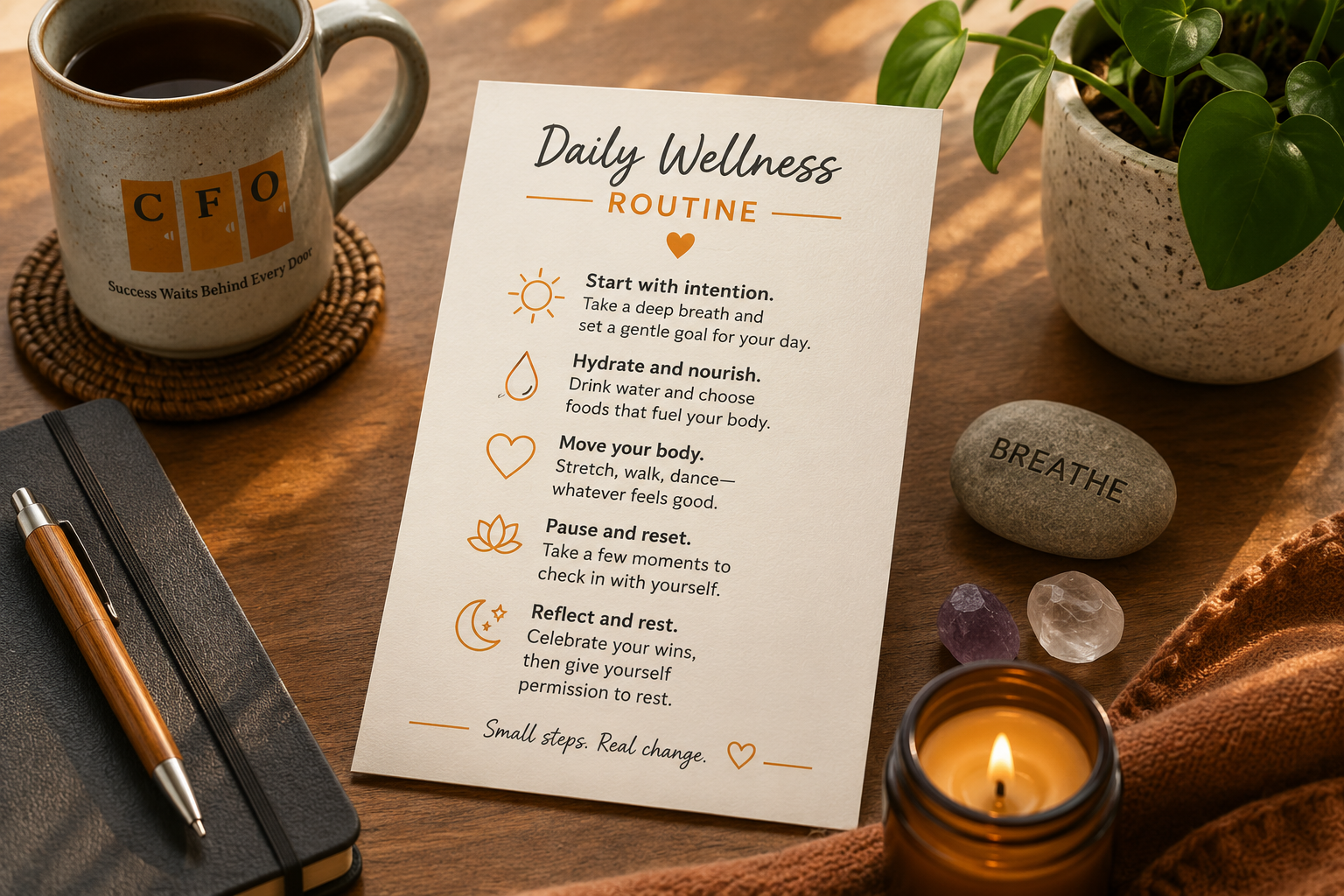
A daily wellness routine only works if you can actually keep it.
There are two lists in a wellness plan, and mixing them up is the fastest way to quit.
The first is the big one — the whole toolbox. Everything that helps you, from easy things like a deep breath to rare things like a long visit with someone you trust. That list can be as long as you want. A big toolbox is a good thing. More choices means a better chance one of them fits the day you’re actually having.
The second list is short. In APPR we call it the daily maintenance list. It’s the handful of things you do every day just to stay steady — not the things you’d like to do, the things that, when you skip them, you feel it.
These two lists have to stay separate. Here’s why.
What happens when the list gets too long
I know my own pattern. When things are going well, I add to the daily list. I’m feeling good, so I get ambitious. One more thing. Then one more. The list grows.
Then a hard day comes — and the list is too long to finish. I miss a few things. Missing them makes me feel behind. Feeling behind makes the hard day harder. So I drop the whole list. All of it. And a wellness plan I can’t keep is the same as no plan at all.
A daily list that makes you feel like you’re failing has stopped doing its job. It’s supposed to hold you up, not weigh you down.
So now I ask one question before anything goes on the daily list: can I do this on my worst day? If the answer is no, it doesn’t belong there. It belongs in the big toolbox, for days when I have more room.
The tools that cost something
Some tools help a lot and cost something too. Those almost always belong in the big toolbox, not the daily list.
Journaling is like that for me. Writing things down settles my head like almost nothing else. But it hurts my shoulder. I can’t do it every day without paying for it. So journaling isn’t a daily thing — it’s a thing I reach for on the days my head needs the help more than my shoulder needs the rest. And those days exist. That’s the whole point. I keep it ready for when the trade is worth it, instead of forcing it into every day until I resent it.
It looks different for different lives. Say walking clears your head — but you’re already on your feet all day because there’s nowhere to just sit and be. One more long walk might wreck your feet, or wear you out for everything else the day still needs from you. So walking isn’t daily either. It’s what you reach for on the days your head needs the quiet more than your body needs the rest. Same shape. Real tool, real cost, kept in the toolbox instead of forced onto the daily list.
Noticing the cost isn’t giving up on the tool. It’s how you keep the tool without it turning on you.
Your list, in whatever form works
One more thing, because it matters and almost nobody says it: your wellness plan does not have to be written down.
The workbook has lines on it. That doesn’t mean the plan lives on paper. If reading and writing aren’t how you work — for whatever reason — the plan is still yours, in whatever form you can keep.
Your daily list can be three things you say out loud each morning. It can be pictures instead of words. It can be a few objects in your pocket that each mean something — a stone, a photo, a token that means go sit where it’s warm. It can be a voice memo on a borrowed phone. It can be one trusted person who holds the list for you and reminds you when you can’t hold it yourself. APPR even points people toward images and vision boards for exactly this reason.
The plan is not the paper. The wellness is in the thing you do, not in whether you wrote it down.
The whole idea
Keep the big toolbox as full as you like. Keep the daily list short enough to finish on your worst day. And keep it in whatever form you’ll actually reach for.
A short list you keep beats a long list you quit. Every time.
More from the CFO blog
- Pacing as a Recovery Skill — goes deeper on the daily list and the “can I do this on my worst day?” question, if you want the longer version.
- Burnout Is Not a Motivation Problem — a different angle on why a list that turns into pressure wears you down. Hint: it isn’t because you stopped trying.
CFO’s peer support programs across Northern Virginia can help you sort the big toolbox from the short daily list — and build both in a form that fits your life.
CFO’s virtual support programs and
employment services help people across Northern Virginia
stay connected, supported, and encouraged.