
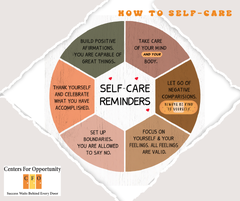
Peer Support Boundaries: Why Saying No Is an Act of Care
A few months ago we wrote about emotional labour — the work of managing feelings in shared space. We talked about how that labour, when it is invisible and unequal, can quietly wear us down.
Today we want to talk about what comes next.
Because once you start to see emotional labour, the next question is: what do I do with it?
The honest answer is that some of the work belongs to other people. Some of it never belonged to us in the first place. And some of the most important work in recovery is learning to tell the difference.
That is what boundaries are for.
Boundaries are not walls
A lot of people hear the word “boundary” and picture a fence. A barrier. Something that keeps people out.
That is not what we mean.
A boundary, in peer support, is a way of staying real with someone. It is the line between I care about you and I am responsible for you. It is the difference between being present and being absorbed.
When we set a boundary, we are not pushing someone away. We are protecting the relationship from the resentment that builds when we give more than we have.
Boundaries are how we stay in the room.
Why this is harder than it sounds
Many of us learned, early in life, that the way to stay safe was to take care of other people’s feelings. We got good at reading rooms, softening our words, smoothing things over. Those skills kept us alive. They are real skills. They deserve respect.
But the same skills that protected us as kids can hurt us as adults. They can make it almost impossible to say no, not today. They can make us feel like setting a limit is the same as abandoning someone.
It isn’t.
What this might look like
A boundary can be small. I can’t talk right now, but I can call you tomorrow. It can be quiet. I love you, and I need to take this weekend for myself. It can be a thought you only say to yourself. Their feelings are not mine to fix.
A boundary doesn’t have to be loud to be real.
When the cost of “no” is not the same for everyone
There is something else worth saying here, because it doesn’t get said often enough.
Setting a limit costs more for some people than for others. A “no” from someone with stable housing, a steady paycheque, and a community that has their back is not the same as a “no” from someone who could lose their job, their home, or their safety for saying it. The consequences of holding a boundary are not evenly distributed.
This is true across race, class, gender, ability, and immigration status. It is true for people leaving incarceration. It is true for people whose families or communities punish honesty harder than silence. It is true in workplaces where some people are listened to and others are labelled “difficult” for saying the same thing.
If holding limits has felt impossible in some parts of your life, that is not a failure of your practice. It is sometimes a clear-eyed reading of what you can and cannot afford.
We say this because boundaries language often assumes a kind of safety that not everyone has. Naming that out loud is part of the work. So is building communities where saying no does not cost people what they cannot afford to lose.
Holding boundaries together
Boundaries are not only an individual practice. The spaces we belong to — peer groups, families, workplaces, communities — also need to hold them. When a community treats limits as legitimate, when it does not punish people for stepping back, when it shares the work of caring across many shoulders rather than letting it fall on a few — that is a community that makes boundaries possible.
A community that takes boundaries seriously is one that takes the cost of holding them seriously, too. It is one that does not require anyone to risk what they cannot afford to risk in order to be heard.
We get there together.
A reflection
What is one limit you are learning to hold?
What is one limit you wish someone else would hold with you?
There is no right answer. Just the practice of asking.
CFO’s virtual support programs and
employment services help people across Northern Virginia
stay connected, supported, and encouraged.