
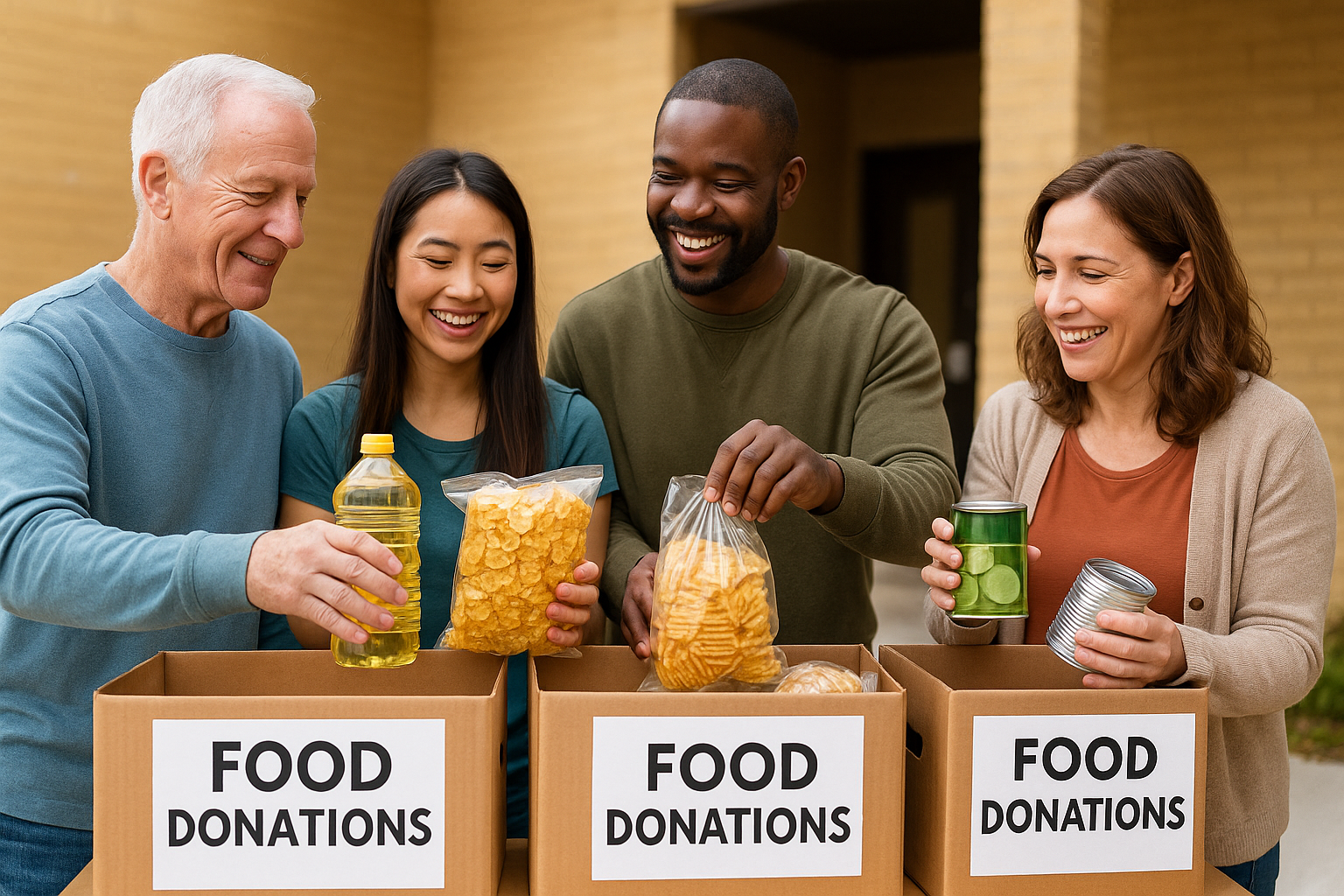
Many of us learned that strong people handle things on their own. We’ve written before about that myth and about community as a life raft. This month, we want to take the idea a step further, from you don’t have to do this alone to none of us ever did.
Looking back on the walk
Over the past few weeks, we’ve walked through a few connected ideas. More of our neighbors in Northern Virginia need support right now. Loneliness tends to follow hard times, and connection shapes health as much as food and housing do. Peer support meets people where connection and practical help overlap, and it grew out of people helping each other as equals.
Interdependence isn’t weakness
Interdependence means we rely on each other and others rely on us. It’s everywhere once you look for it. Someone grew your food. Someone drives your bus. A neighbor holds your spare key. Needing others is ordinary human life.
Peer support grew from that truth. People who were told they were too broken to help anyone found out they could help each other, and that helping each other was part of how they healed.
What makes connection possible
Connection needs places to happen. The Surgeon General’s advisory calls these places social infrastructure: libraries, parks, public transit, community groups, volunteer organizations, and places like peer centers. When those places are strong and open to everyone, connection is easier for everyone.
Public health researchers have also noticed a gap. A review of loneliness research found that most programs help people after loneliness has already taken hold, and very few work to prevent it across a whole community. The authors call on public health to lead that kind of community-wide prevention. In other words, connection isn’t only a personal project. It depends on the shared places and supports around us.
What community can carry, and what it can’t
Community can carry a lot. It can share knowledge, meals, rides, and hope. It can sit with grief and celebrate small wins.
Community can’t replace fair wages, affordable housing, reliable transportation, or health care. When people are told to simply lean on their community, the weight can fall on those who are already carrying the most. Shared care works best when everyone does their part, from neighbors and peer groups to the larger systems that shape our days.
Holding both of these at once is honest. Peer support is powerful, and it works best as one strand in a wider web.
If you’re alone right now
“We were never meant to do this alone” can be hard to read if you’re alone right now, or if people who should have been safe caused harm. If that’s you, please hear this: being alone is not a failure. Many people are isolated because they have survived a lot, and trust can take time to grow again. You get to go at your own pace.
Giving back as part of healing
One of the oldest lessons of mutual aid is that giving can be part of healing too. The Surgeon General’s advisory names volunteering as a strong way to build connection. Sharing what you’ve learned, showing up for a group, or helping someone find their way can bring Meaning, one of the five parts of CHIME, back into a life.
Think of a shared table where everyone brings something and no one has to bring everything. That’s the kind of care we believe in at Centers for Opportunity.
A question to sit with: What’s one thing someone brought to your table that you still carry with you?
Sources
- Office of the U.S. Surgeon General (2023). Our Epidemic of Loneliness and Isolation, Pillar 1: Strengthen Social Infrastructure in Local Communities.
- Crowe, C. L., et al. Perspectives in Public Health, 144(1) (first published online 2022). Loneliness prevention and the role of the Public Health system.
- Leamy, M., et al. (2011). British Journal of Psychiatry.