
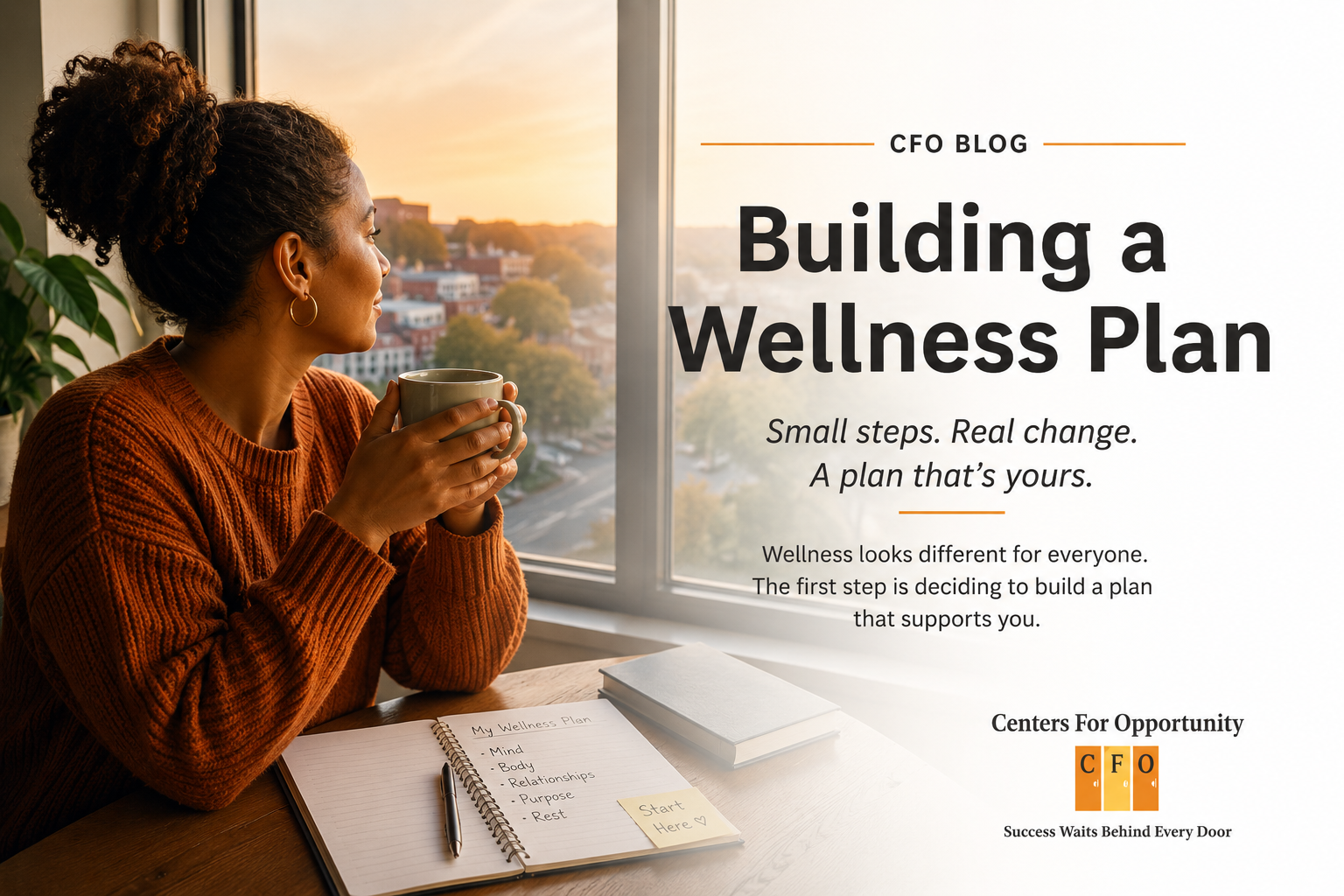
I sat down to write about building a wellness plan and went completely blank.
Not a little stuck. Fully blank. The page stayed empty, and the longer it stayed empty, the bigger the whole thing got in my head. I know a lot about wellness plans. Somehow that made it harder, not easier. Where do you even start?
So I did the thing I tell other people to do. I went back to the beginning.
And the beginning is not building. The beginning is noticing.
Building a wellness plan starts with noticing
There’s a story we carry about wellness plans — that you sit down with a blank page and build yourself a better life from scratch. Get the right habits. Fix the broken parts. Do the whole thing correctly, all at once.
No wonder it feels like too much. That’s not a plan. That’s a second job.
Here’s what’s actually true: you are already doing things that keep you upright. Every day, you do small things that help. And most of them you’ve never noticed — because nobody ever asked you to.
That’s the first move in building a wellness toolbox. Not adding. Noticing. In Action Planning for Prevention and Recovery, a wellness plan we use at CFO, this is exactly where you start. The Wellness Toolbox is just the list of things you use to feel better — and one of the plainest ways to build it is to notice the good things you already do as you go through your day.
What “works” actually looks like
When I say notice what works, I don’t mean big, impressive stuff.
I mean the walk you take without thinking about it. The friend you call. The one real meal. The music you put on. Sitting somewhere warm for a while. The thing you do with your hands. Stepping outside just to feel the air.
These don’t look like a wellness plan. They look like a regular Tuesday. That’s exactly why they get missed.
But if it helped, it counts. A tool is anything that leaves you a little steadier than before. It doesn’t have to look healthy or productive. It doesn’t have to be something you’d mention to a doctor. It has to work — and you’re the one who gets to say whether it does.
Two more things
I want to be straight with you about two things, because a wellness plan built on a lie doesn’t hold.
First: noticing what works assumes something is working. Some days, nothing is. Some seasons, nothing is. If you go looking for what helps and come up empty, that is not a failure of attention, and it is not a failure of you. It usually means you’re carrying more than any toolbox was built to hold. On those days, the honest move isn’t to try harder to notice. It’s to reach for a person, not a tool. (More on where to find that person later in this series.)
Second, and bigger: a toolbox is not a substitute for what you actually need. Noticing what steadies you does not pay rent. It does not fill a fridge or make a landlord pick up the phone. I’m not going to pretend a wellness plan fixes what’s wrong out in the world, because it doesn’t — and you’d know I was lying. What a plan can do is help you stay a little more yourself while you deal with the rest. That’s real. But it isn’t everything, and anyone who tells you different is probably selling something.
Start small enough to actually start
So here’s the whole assignment, and it’s smaller than you’d think.
For the next few days, just notice. When something leaves you a little steadier, catch it. That’s it. You don’t have to do anything with it yet. You’re not building the plan. You’re collecting the clues.
You already know more about what keeps you well than any workbook does. We’re just going to start paying attention to it.
More from the CFO blog
- Pacing as a Recovery Skill — a closer look at the one skill this whole series rests on: noticing where your capacity actually is on a given day, instead of where you wish it was.
- You Are More Than Your File, Diagnosis, or Intake Form — a reminder that you’re the expert on yourself. No form knows what keeps you well better than you do.
CFO’s virtual support programs and
employment services help people across Northern Virginia
stay connected, supported, and encouraged.